

Ecoculture Expeditions
Purpose-driven experiences


Be part of the solutions
Agrovoltaic System for Sustainable Farming, Food Security, and Scientific Tourism on San Andrés Island
Turning sunlight into food and autonomy: community agrovoltaics led by Raizal women who cultivate, generate energy, and help conserve San Andrés Island
This initiative was born from the innovation-action process launched in 2023 by the EcoCulture Foundation, with funding from Minciencias and Fondo Acción, to address food insecurity, diesel dependence, and ecosystem degradation on San Andrés Island.
The initial diagnosis revealed three key bottlenecks: Raizal women sustaining horticulture without access to technology or credit; 87% of fresh food being imported due to less than 1% of suitable land being cultivated; and shallow, saline coral soils that require minimal irrigation and clean energy solutions.
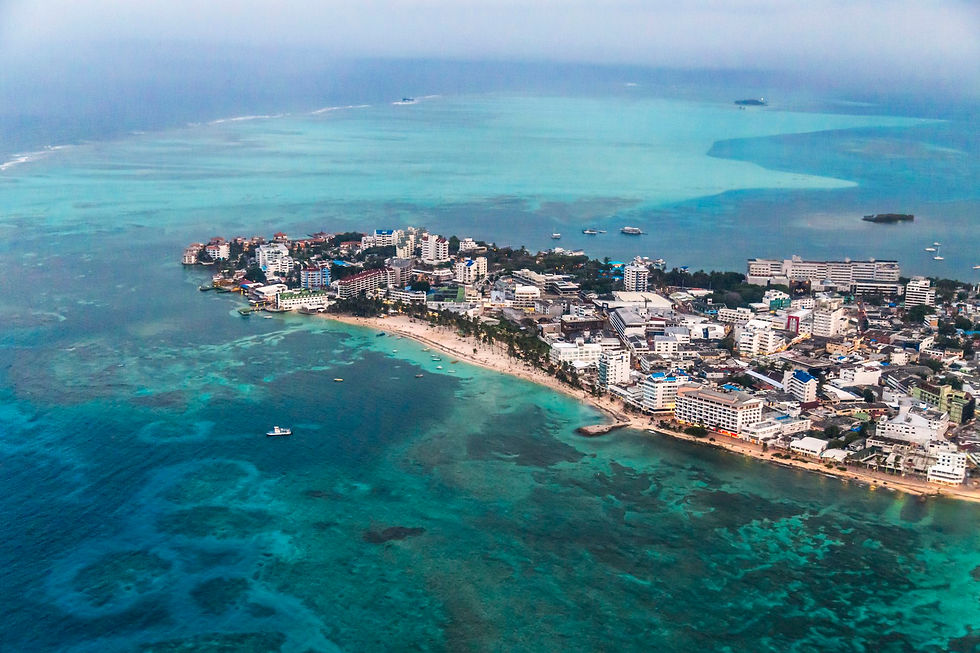
The island of San Andrés
San Andrés Island (SAI) shows a structural imbalance that places it under a “triple dependency”: food, energy, and economic dependence.
Around 87% of the fresh food consumed by its 70,000 inhabitants is transported by ship or air (according to the 2023 Agriculture Secretariat report), which increases the cost of the food basket by 32% compared to the mainland average and adds 1.5 kg of CO₂ per kilogram transported. The National Nutritional Situation Surveys (ENSIN-2021) report that 27% of the population experiences moderate or severe food insecurity, with Raizal children being particularly affected.
Although the Agustín Codazzi Geographic Institute maps 1,765 hectares suitable for agricultural use, only 1.2 hectares (0.01%) were cultivated in 2022. The soils are shallow coral-based (<25 cm), saline, and low in organic matter, while real estate pressure has reduced land that could otherwise be used for horticulture.
In terms of energy, the island’s electrical grid depends 95% on diesel plants. The Mining and Energy Planning Unit reports a cost of 0.29 USD/kWh and emissions of 0.74 kg CO₂-eq/kWh, among the highest in the country.
Additionally, mass tourism models (“all-inclusive” or “cheap island tourism”) concentrate benefits in external hotel chains: 73% of tourism revenue leaves the island (DANE, 2022), while local employment is limited to low-income services. This reinforces underdevelopment, with per capita income 35% below the national average and accelerating loss of coastal ecosystems.
OBJECTIVES
WHY INSTALL AN AGROVOLTAIC SYSTEM in San Andrés?


Distributed solar energy is the practical solution for San Andrés because it reduces diesel use, lowers operating costs, and enables food production in fragile soils.
The agrovoltaic system (AVS), which combines solar panels, hydroponics, and low-energy cooling, makes it possible to increase local vegetable production, replace fossil energy with renewable energy, and generate scientific evidence on biodiversity and agroecology in insular environments.
What are the chances of solving these problems in the short term?
San Andrés Island’s deficits (87% imported food and 95% diesel-based electricity) require fast and scalable solutions. The goal is not to solve everything immediately, but to test an operational model that reduces imports, generates jobs, and produces public evidence, while opening the door to investment for scaling up.
Our 12-month plan focuses on defined and measurable targets:

A 1.38 kWp agrovoltaic system installed in already committed farms within the Scientific Tourism Network (restaurants, hotels, supermarkets, and financiers), with trained owners and prepared land.

The kits (PV system + drip irrigation + hydroponic module) are delivered pre-assembled; logistics from Cartagena to San Andrés take approximately 10 days, and technical setup takes around 2 weeks. In less than one month, the farms will be producing and generating data.

Validated crops will be cultivated, while new crops will also be introduced through innovation. This is expected to increase local food supply by +5% in the first harvest, doubling in the second harvest without additional investment.

Sensors and camera traps—already tested—will provide at least 120 georeferenced records (≈2 per day), sufficient for analysis and dissemination, and to support financing through biodiversity bonds.

Training is ensured through three workshops (months 4, 7, and 9) for 25 women and young people in solar agroecology and data use, which also helps create new jobs.

Utility model (processing <45 days before the Superintendence of Industry and Commerce – SIC) for replicating the system in other developing island territories.
What does a company gain by donating its taxes to finance the AVS (Agrovoltaic System)?
By donating to the EcoCulture Foundation, classified under the Special Tax Regime (Régimen Tributario Especial), the donor company receives a direct 25% income tax deduction for the fiscal year, while generating verifiable social and environmental impact.
-
The donor company benefits from a 25% tax deduction on the donated amount applied to its income tax.
-
Donation certificate with all formal requirements for the tax deduction.
-
Donation agreement and supporting documents (bank transfer or delivery record).
-
Copy of the Tax ID (RUT) and RTE certification of the EcoCulture Foundation.
-
Impact report (quarterly/annual) of the agrovoltaic project. (If applicable) Proof of restricted account/trust fund for the project.
If you wish to learn more about the National Tax Statute, Article 257, we suggest reading: https://estatuto.co/257